Art and Design
Rationale
At St Anthony’s, art enables pupils to explore and express the beauty of God’s creation through imagination, creativity, and reflection. It fosters an appreciation for the world around them and encourages children to use their talents to communicate ideas, emotions, and faith. Rooted in Catholic Social Teaching principles of the Dignity of the Human Person and Community and Participation, art helps pupils value the contributions of others and see creativity as a gift from God to be shared. Through studying artists, cultures, and techniques, pupils learn to appreciate diversity, develop perseverance, and grow in confidence as they create and respond to works of art.
Intent
Our art curriculum, following the Kapow Primary scheme, aims to inspire and challenge pupils to think creatively and develop mastery in a broad range of artistic techniques. It provides a carefully sequenced progression of knowledge and skills, enabling children to build upon prior learning and express themselves with increasing confidence and independence.
Core principles include:
- Nurturing creative, reflective individuals who use their God-given gifts to inspire and bring joy to others.
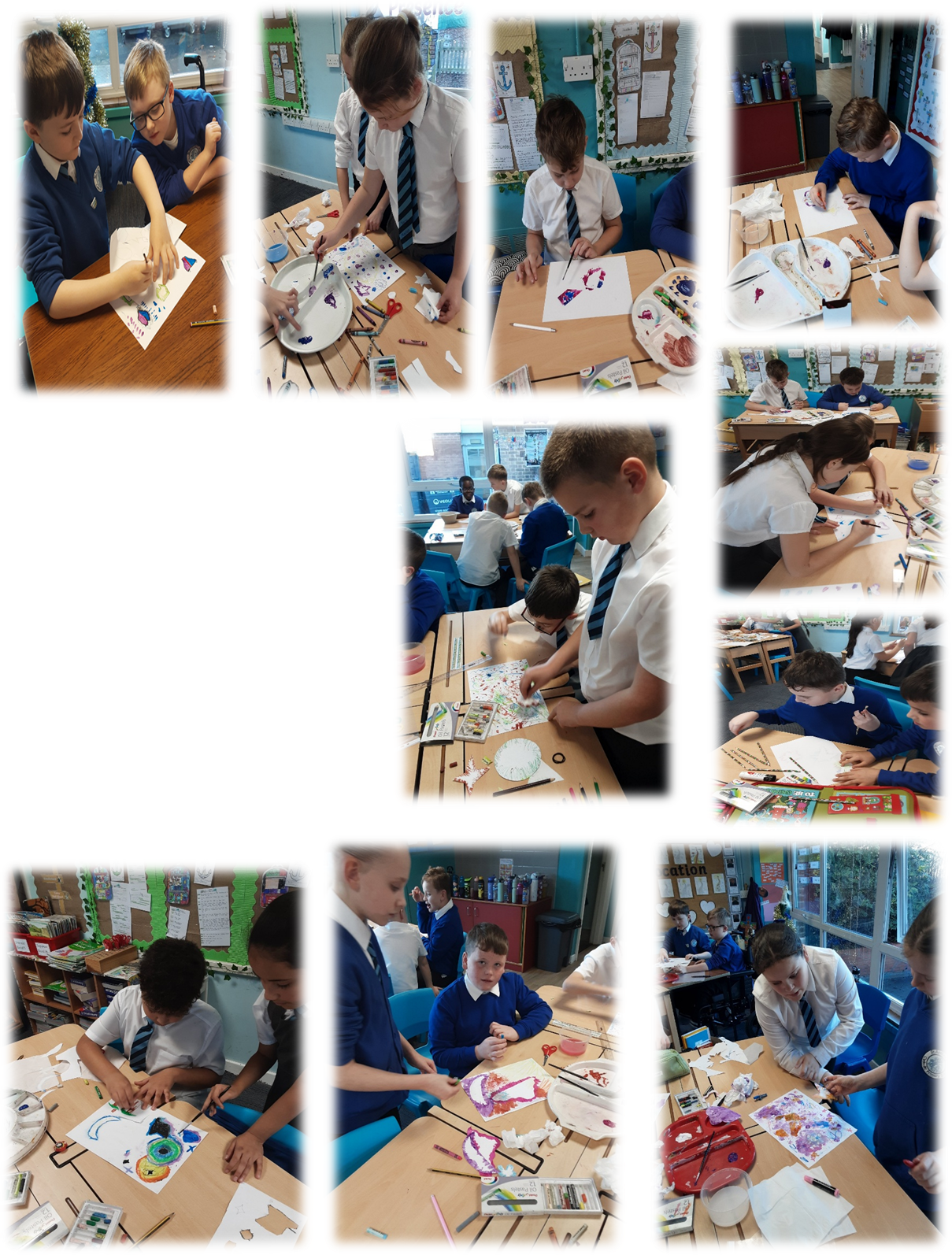
- Developing technical competence in drawing, painting, sculpture, and a variety of materials and techniques.
- Encouraging curiosity and appreciation of art in different times, places, and cultures.
- Promoting resilience, self-expression, and thoughtful evaluation of one’s own and others’ work.
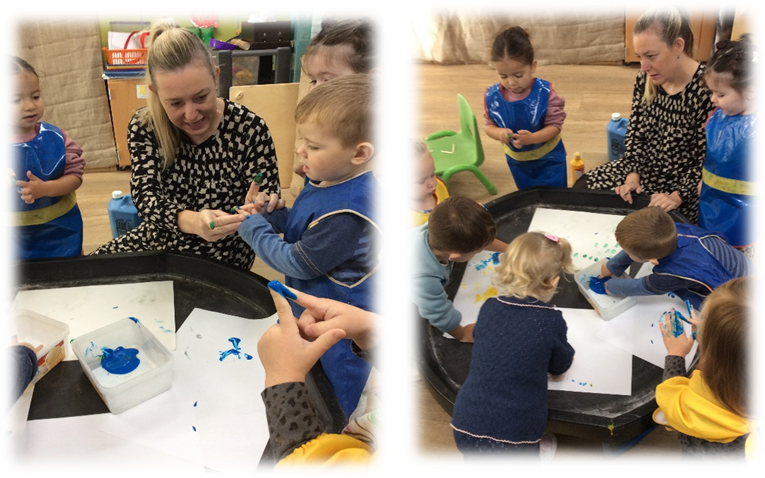
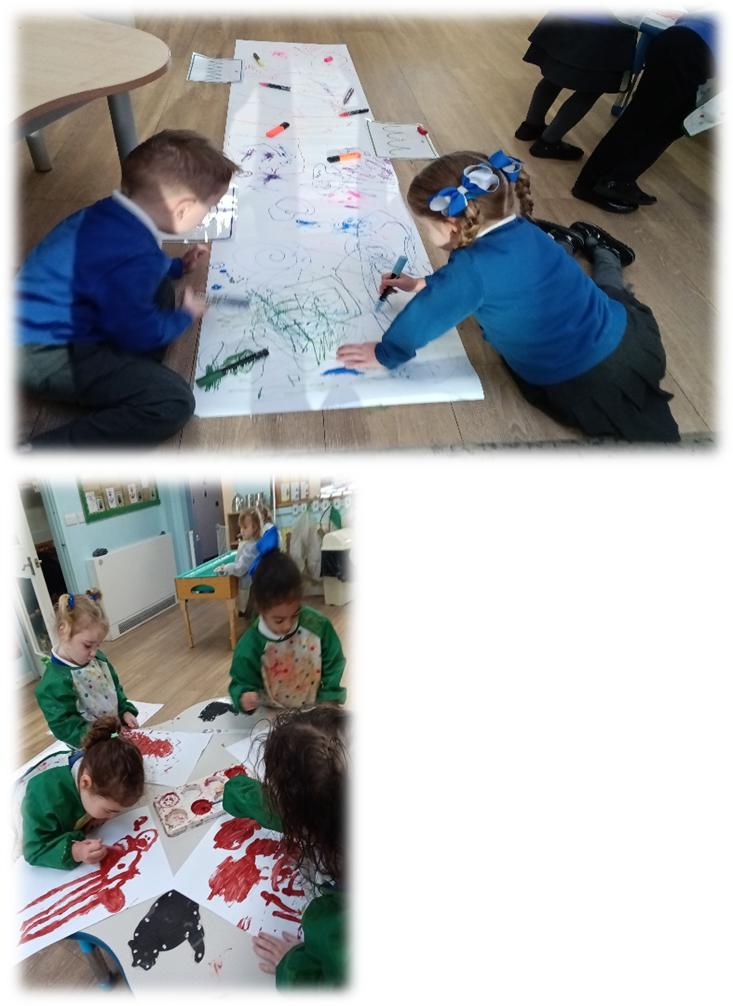
Key Stage 1: Pupils explore colour, shape, and texture through observational drawing, painting, and simple printing. They learn to use line and tone effectively and study artists such as Kandinsky and Yayoi Kusama to inspire their own creations.
Key Stage 2: Pupils refine and apply a wider range of techniques in painting, collage, textiles, and 3D work. They study great artists, architects, and designers across history, exploring themes of identity, culture, and symbolism in art.
Implementation
- Lessons follow the Kapow progression of skills to ensure clear development from EYFS through to Year 6.
- Teaching combines direct instruction, guided practice, and creative exploration, encouraging pupils to take ownership of their artistic choices.
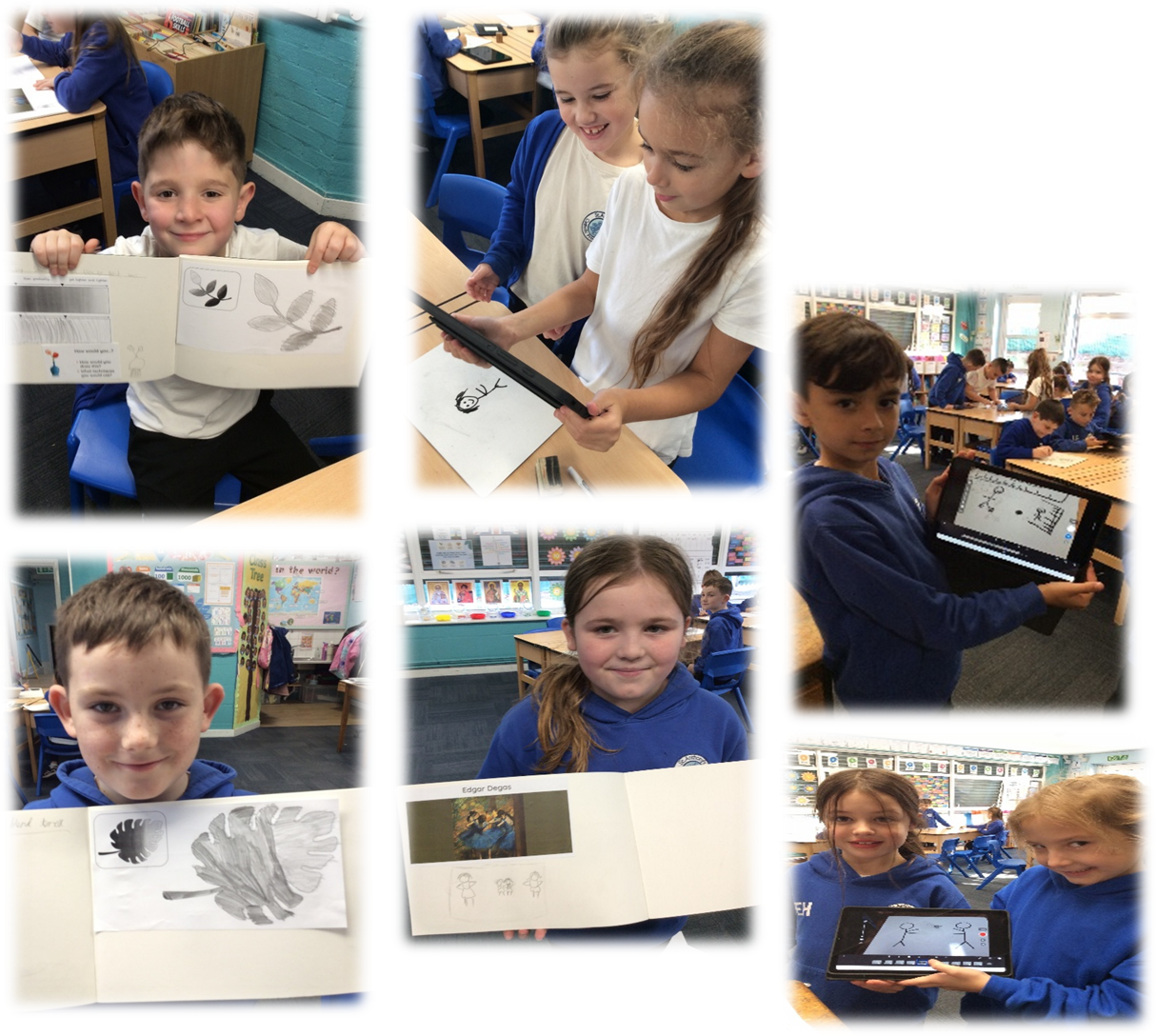
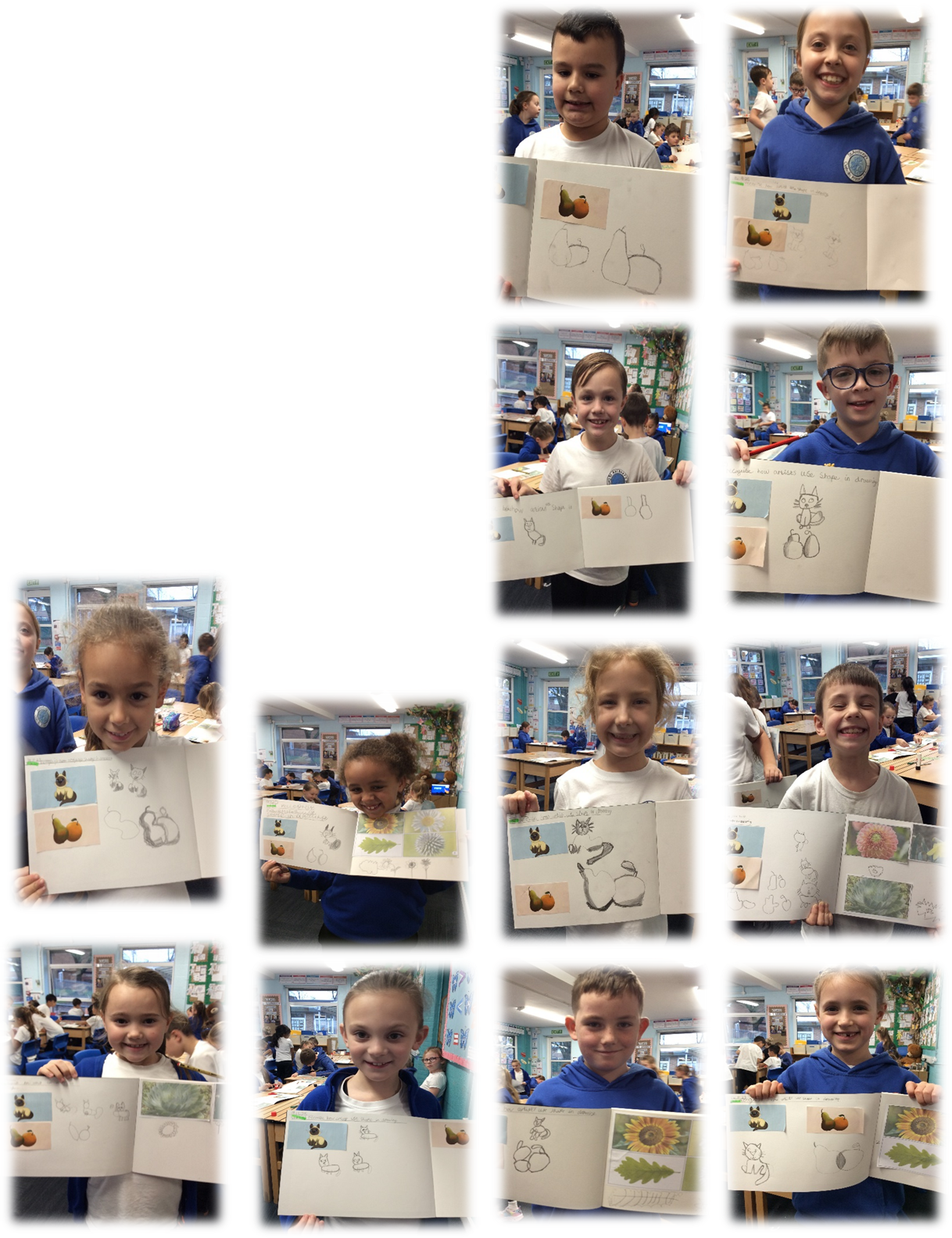
- High-quality resources and sketchbooks are used to record ideas, experiments, and reflections.
- Pupils are taught to discuss, evaluate, and appreciate their own and others’ work respectfully.
- Cross-curricular links with RE, History, and Design & Technology deepen cultural understanding and faith connections.
- Opportunities such as Arts Week, exhibitions, and community art projects celebrate creativity and collective achievement.
Impact
By the end of primary education, pupils will:
- Demonstrate confidence and enjoyment in using a variety of media and techniques.
- Understand how art communicates ideas, beliefs, and emotions across time and cultures.
- Reflect thoughtfully on their own and others’ artwork, using appropriate vocabulary.
- Recognise creativity as a form of expression that glorifies God and contributes to community life.
- Show pride, curiosity, and appreciation for art as part of their lifelong learning and faith journey.
Assessment
- Ongoing teacher observation and discussion assess understanding and progress.
- Sketchbooks provide a continuous record of skill development, creativity, and reflection.
- End-of-unit evaluations and pupil self-assessments support formative and summative judgment.
- Displays and showcases celebrate achievement and progress across the school.
SEND Support Statement
All pupils are supported to achieve success in art through quality-first teaching and adaptive strategies. Lessons include visual examples, step-by-step modelling, and sensory resources to meet a range of needs. Tasks are scaffolded to promote independence, and additional adult support is provided where appropriate. Every child is encouraged to express themselves creatively, with high expectations for effort and engagement.
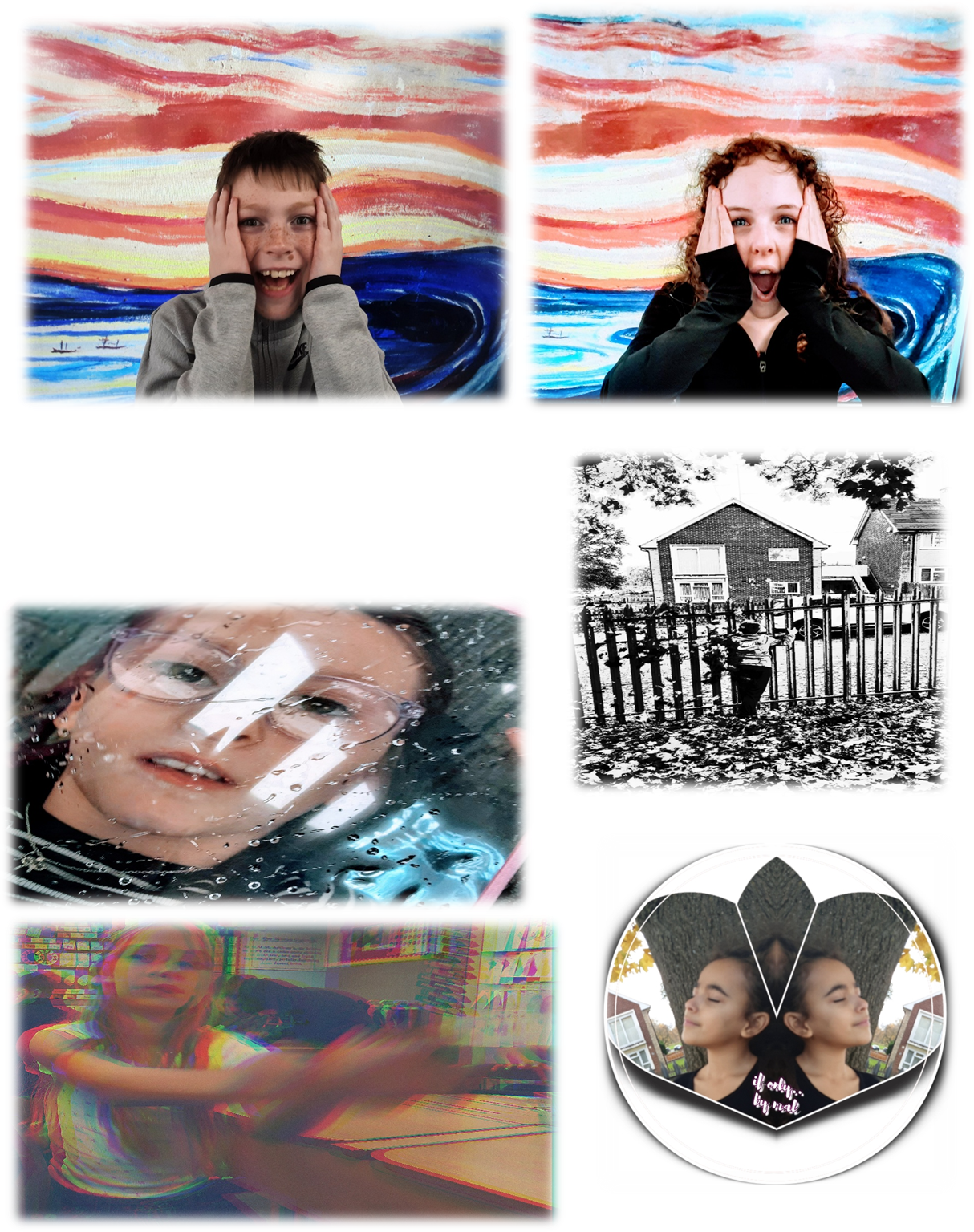
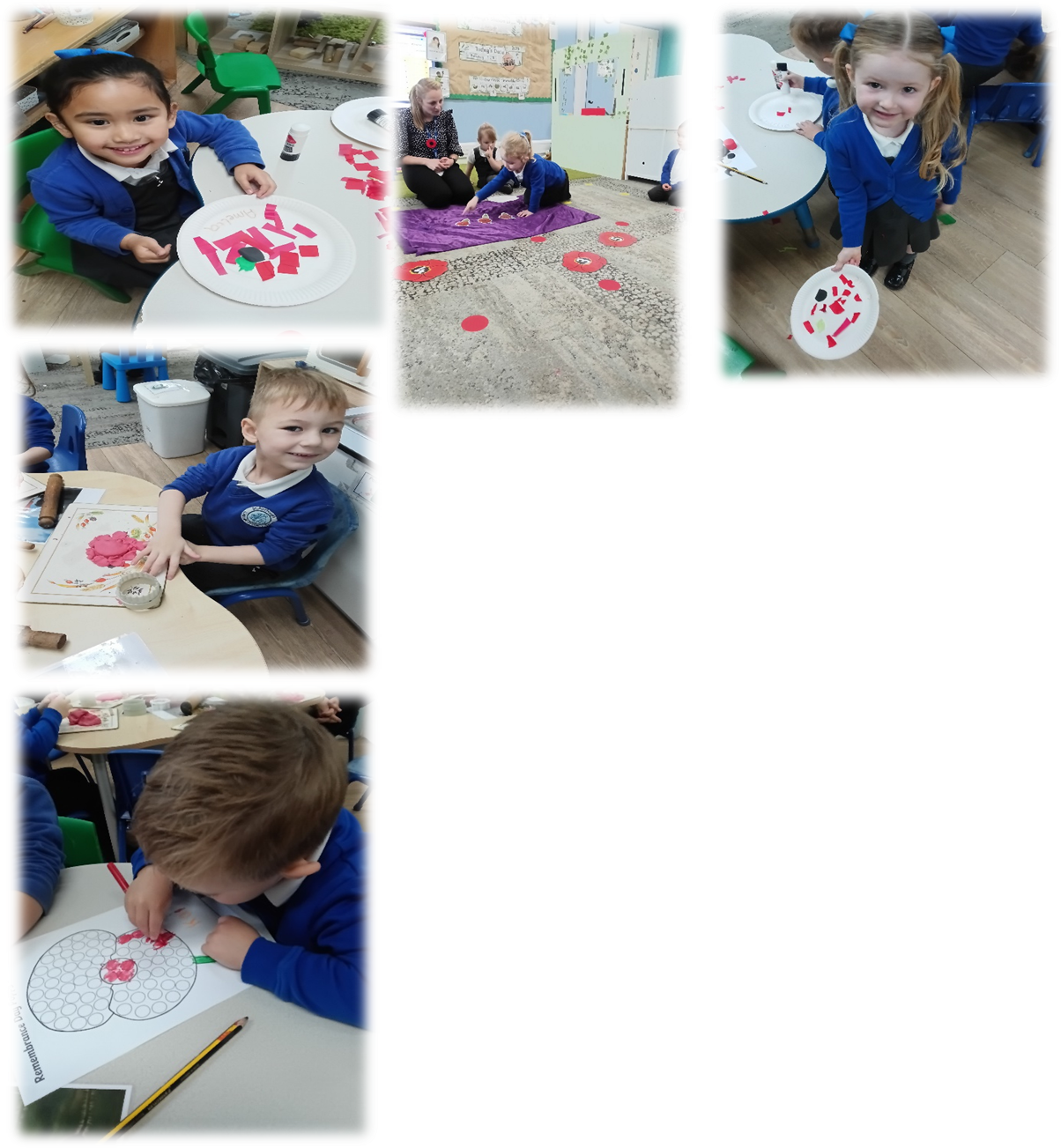
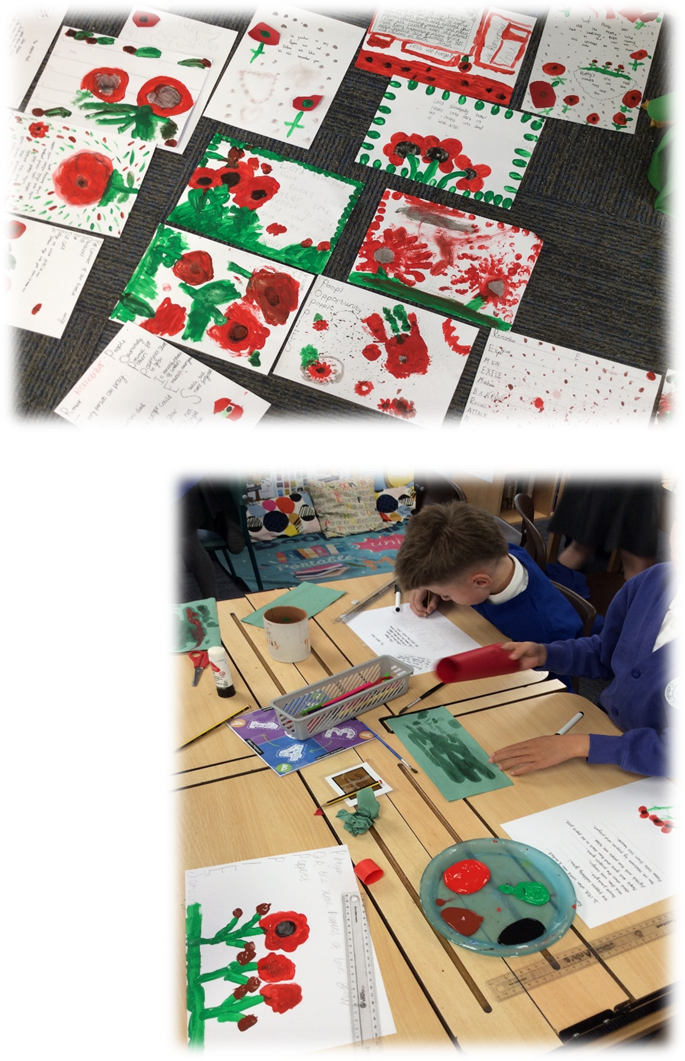
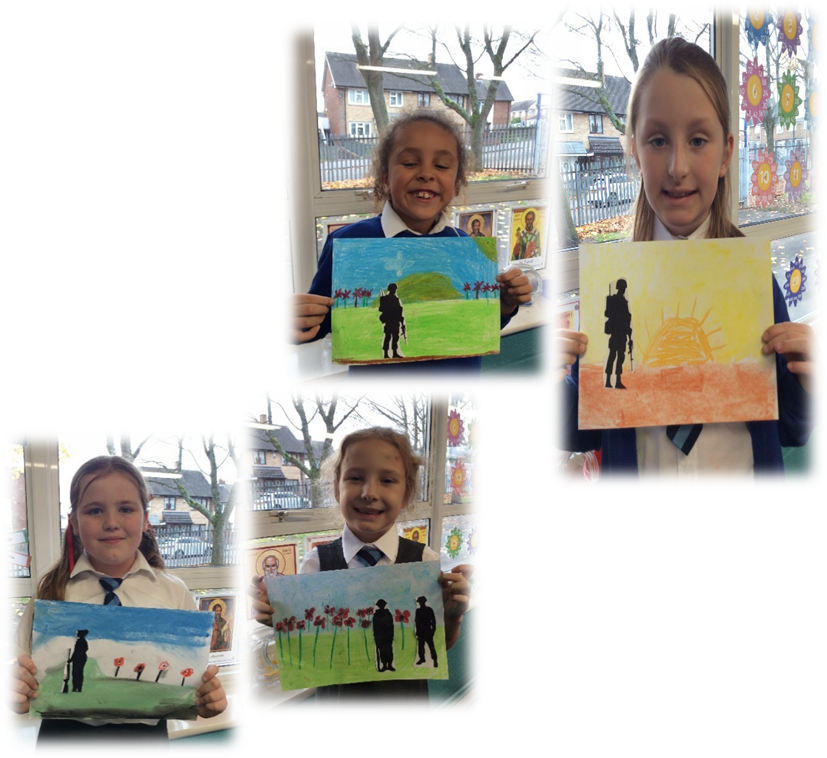
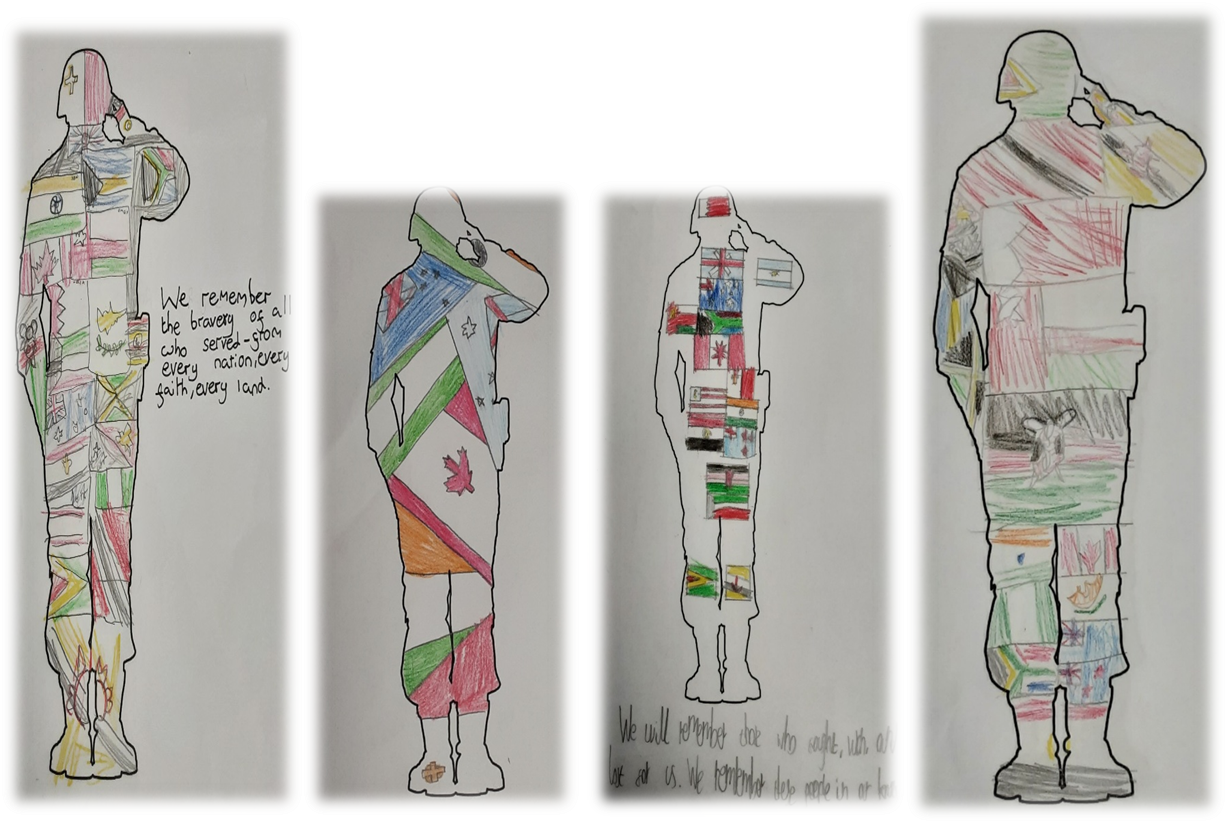
Remembrance Art